Hotel marketing rarely fails everywhere at once. It fails at one point on the path: the campaign runs in English while the guest books in Russian, or the spend is sound and the page it lands on cannot take a booking. A hotel now joining our own portfolio is the second of those — its own site is served over plain HTTP with an expired certificate, and its Book Now button opens an enquiry form rather than a booking engine. No media budget repairs that page from the outside.
We market hotels into the markets the group already sells to — the United Arab Emirates, Türkiye, Vietnam, Thailand, Uzbekistan and the United Kingdom. That matters more than it sounds. A guest searching from Tashkent does not begin in the same place as one searching from Dubai, is not reached on the same networks, and is not persuaded by the same photograph. Copy written for a market you do not sell into reads as translated, and a guest can tell.
Where we also run your website and your booking flow, the traffic we buy lands on something we control. When a campaign works we can widen it; when a page loses people at the date picker we can fix the page rather than write a recommendation about it. And we report the part an owner cares about: what was spent, and what it booked.
Guests have to find the hotel in the engine they actually use, and the engine that leads in one of your markets is not the one that leads in the next — nor do they reward the same page. We keep the property’s own pages, its listings and its map presence consistent across the engines your guests actually search in, and in the language they search in rather than only in English. The work goes into the pages that earn the search — rooms, dining, location, getting there — rather than buying traffic to a page that cannot answer the question.
02
The channels your market uses
The networks that fill a hotel from Tashkent are not the ones that fill it from Dubai, and an account that carries one market will not automatically carry the other. We run the channels that matter for the markets you sell to, in the language of that market. We also post at a rhythm the property can sustain — we treat an account left visibly abandoned as worse than no account at all.
03
Languages, not translations
We market in the language of the market, not in a translation of English. Between them the group’s markets — the United Arab Emirates, Türkiye, Vietnam, Thailand, Uzbekistan and the United Kingdom — are read in Arabic, Turkish, Vietnamese, Thai, Uzbek, Russian and English, and copy is written for each rather than passed through a translator. Nothing goes live in a language before a native speaker has read it. Arabic reads right to left, which changes the layout and not only the words — this site is built that way from the start, and a hotel’s is built the same way rather than retro-fitted.
04
Photography and copy that match the hotel
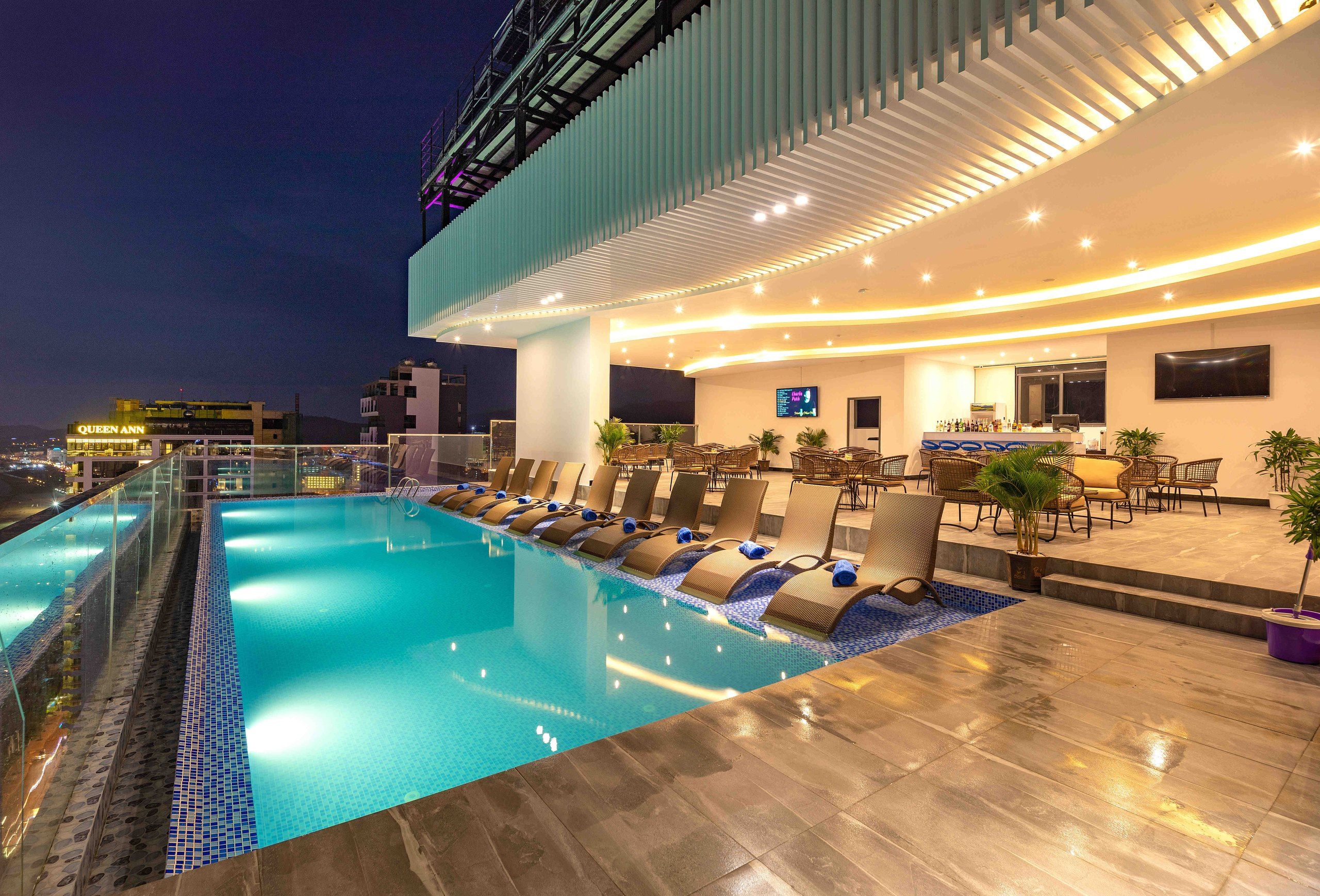
A guest books on the photographs and then measures the room against them on arrival, so we treat them as a promise rather than as decoration. Our rule does not bend: no image goes on a page unless it is that property as it stands today — no stock interiors, no renders of a facility that is not built, no picture of a different resort. Copy is held to the same standard, and where a hotel’s own sources contradict each other we leave the figure off rather than publish the flattering one.
05
What it cost, what it booked
Campaigns are tagged so traffic can be followed through to the booking rather than stopping at the click. You see spend by market and by channel set against the room nights it produced, and campaigns that do not earn their place are stopped rather than defended. Where the booking flow is one we run for you, the numbers do not depend on you taking our word for them.
Marketing is one input into occupancy, not the whole of it. The 85–90% we work towards year-round rests on the partner and tour-operator network as much as on any campaign, and it is a target we work to rather than a guarantee. We do not buy reviews or post as your guests, and no claim about your property is published before you have seen it.